
A NEW NARRATIVE FRAMEWORK FOR DATA CENTERS
"Issue": 145
Introduction
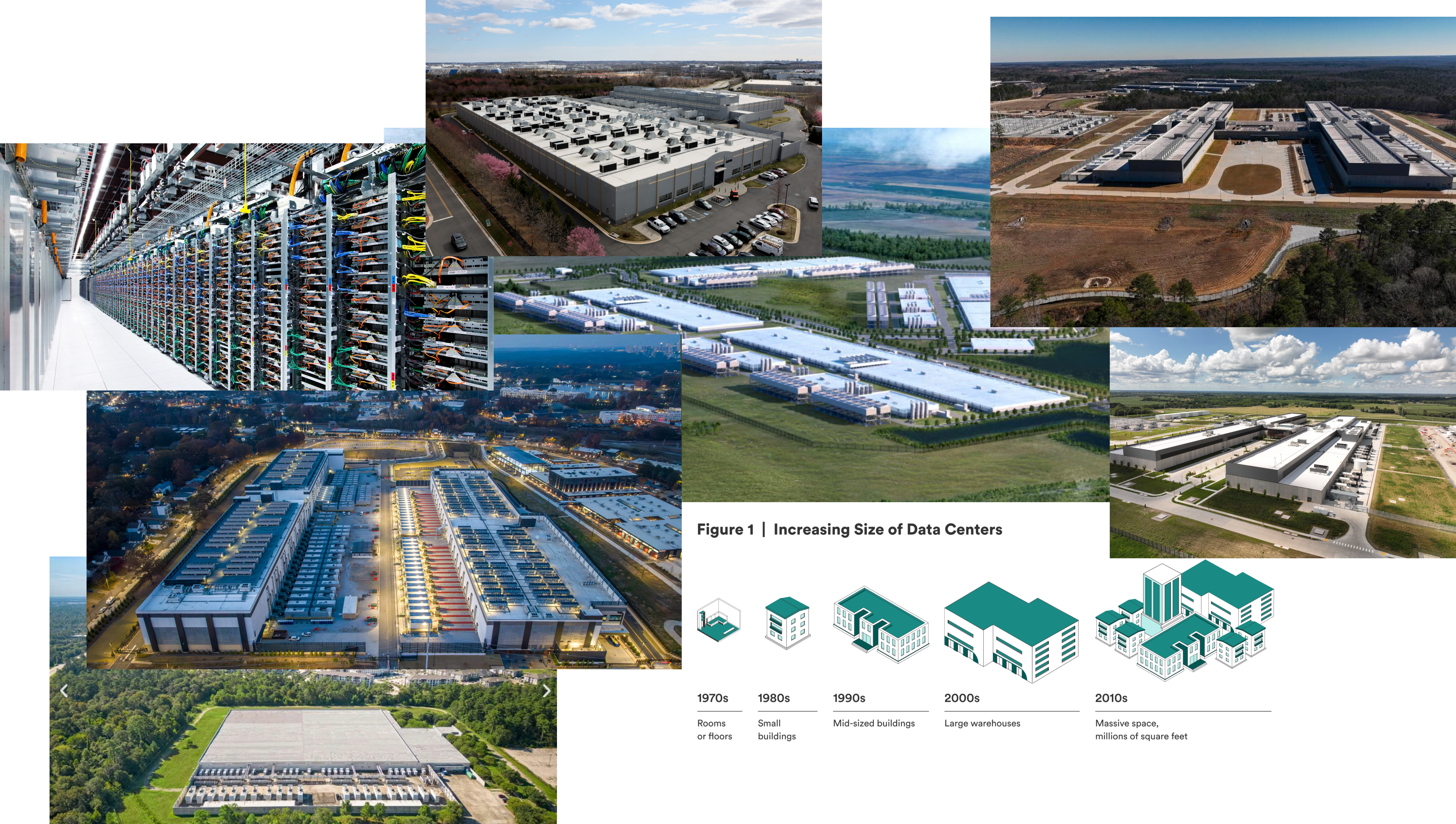
I’ve been thinking a lot (on and off) about data centers as it relates to the overall American psyche, and the soft tech-lash I believe we are already in. What I keep coming back to is the overarching narrative that data centers seem to come with, from both the tech accelerationist side as well as the broader disgruntled American side.
I would sum up the accelerationist side as such:
Data centers are necessary in our cold war style race for powerful AI
Data centers create positive externalities because they create both demand for construction jobs as well as energy production
Data centers are the infrastructure bottleneck to cheap intelligence which will create massive consumer surplus in the end (cure cancer, new physics, etc)
“This is necessary for progress”
I would sum up the disgruntled American side as such:
AI is both stupid and is going to take our jobs, why would I want to support the infrastructure of where it lives
loss of work = loss of the American idea of dignity
Why does the data center need to be “near me” and my community, as opposed to *waves hands* anywhere else
they represent a service that points back to coastal enrichment - which is an extraction from their community
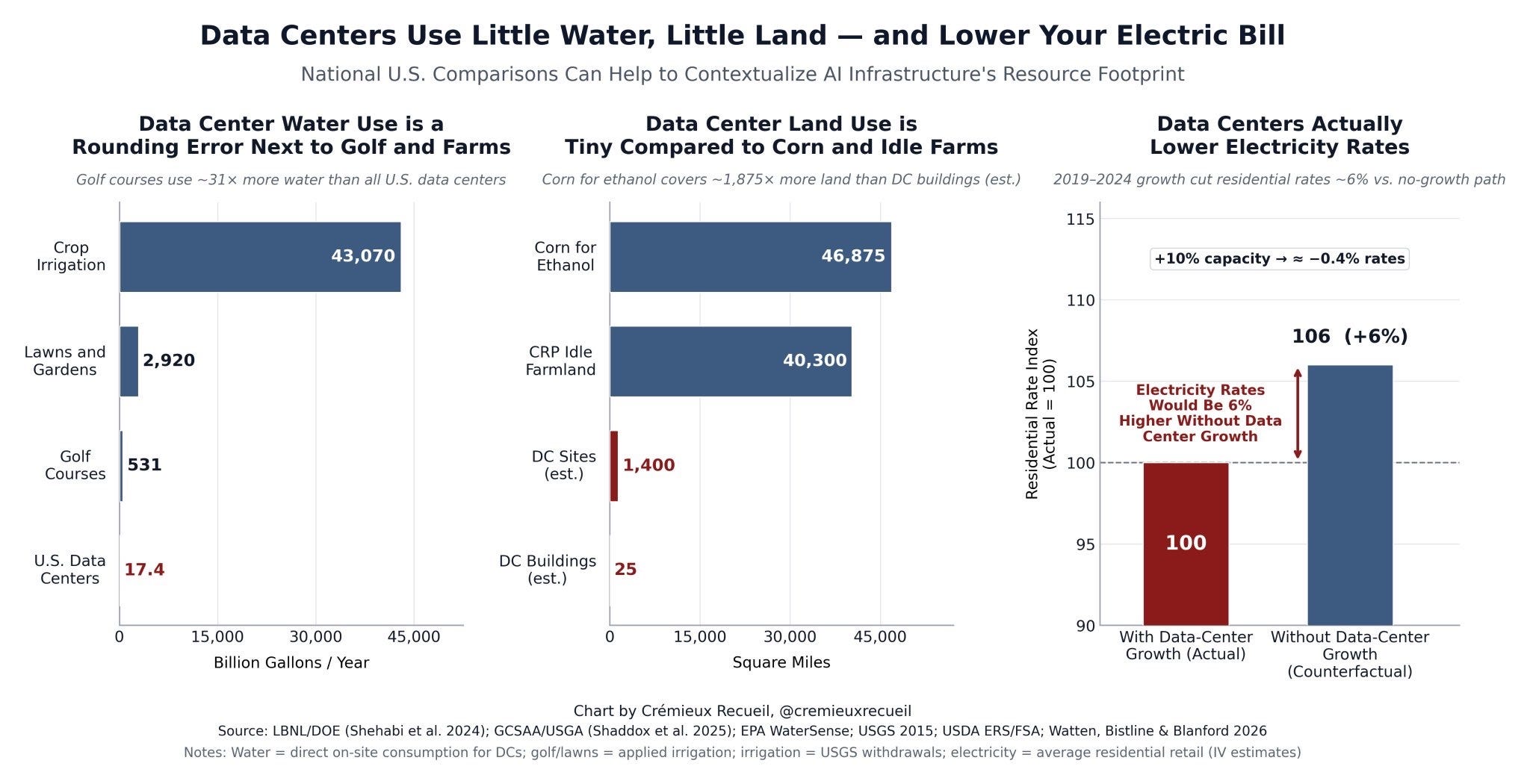
Data centers take up a tremendous amount of water and raise our energy bills
This is just another tech industry form of control
(I found this look into Abiliene, Texas by Soon Media compelling - link)
It doesn’t matter if the arguments are true. If they are in good faith or not. The reality is that states are putting moratoriums on data center build outs. Local communities are rallying to show collective opposition to proposed projects. (70% opposition in one's own neighborhood, 300-plus localities with bans or moratoriums) And the general sentiment around AI, its leaders, and the future it promises is in the shitter.
So what are we to do?
Rem’s Countryside
I’ve been pretty out of love with general essay writing, so the following (like some of my personal favorite pieces before) is just a series of bullets. Hopefully they tell the shape of the idea well enough. The primary reference that has inspired this line of thinking is Rem Koolhaas’s work “Countryside”.
Rem’s career (like many architects) was built on the city. Delirious New York (1978), OMA (1975). He then spent roughly a decade (2012–2020) arguing that architecture's and culture's total fixation on urbanization had become a blindness.
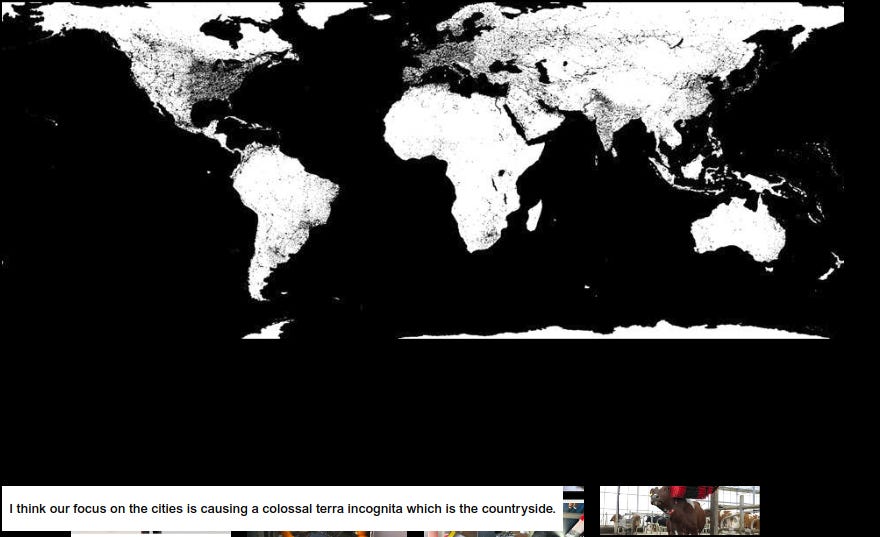
"Countryside" — his deliberately loose term for the rural, remote, deserted, and wild territories that make up 98% of the earth's surface — is not the stable, nostalgic backdrop we imagine. It is where the most radical transformations of our era are actually happening: automation, climate change, migration, genetic experimentation, political radicalization, and the physical infrastructure of the digital economy.
The countryside has been ignored. And this is a 20th century anomaly. For most of history, Jefferson to Mao, the countryside was the primary political project. But urban triumphalism has subverted that.
Beyond the American frame of “coastal elites”, we have looked at urbanization as the global statistic (and the overriding image) of progress. This has not only given us a statistical claim to undermine the countryside, but to also reorient it towards serving growing urban centers.
However, the average urban person doesn’t see it this way. Instead they have a sort of fiction around the countryside.
One is a sort of pastoral, slow, authentic, unchanging leisure-economy view. Rem uses his own observation of a Swiss village that had grown in size while emptying of its original life.
In his Icon essay he calls the actual condition "the intermediate": a manicured surface whose appearance bears almost no relation to what is happening on the land and inside the buildings. The countryside, he insists, is "now the frontline of transformation" / "more volatile than the most accelerated city."
The other is a bit more hostile. Perhaps what Wendell Berry might call a “prejudice against country people”. This, I feel is very critical to understand the invisible psychology of data centers. Essentially, a belief that “it is fine to put these structures around those people”. As coastal elites (those building AI and promoting it’s underlying takeover as the engine of progress) generally do not look at those in “flyover states” with a sophisticated love for their cultures and communities.
Rem argues the countryside is increasingly governed by a Cartesian order. Gridded, mechanized, optimized for maximal production. In "The Cut" he makes the mechanism explicit and causal: because cities have become "massive machines for whimsicality" — preoccupied with fun, pleasure, and interaction rather than need — we are "obliged to install, as a counterweight, a hyper-Cartesian infrastructure of organization in the territory formerly known as the countryside." Rigor, abstraction, and rational geometry — qualities modernism once promised the city — have migrated to the land: pivot-irrigation circles, greenhouse cities, server farms, fulfillment centers, robotic agriculture. The frivolity we associate with rural life now belongs to the city while the countryside got the machine logic.
In conversation with Benjamin Bratton (Strelka, 2017), Koolhaas accepts a striking reformulation: the old model held that cities were where the machines lived and the countryside was nature's garden. That has inverted — cities are where the humans are; the countryside is where the machines live. He proposes the urban/rural line might now be better drawn as dense vs. un-dense, or "occupied by human beings or occupied by machines." This is the origin of his use of "post-human" for the new rural typologies.
We even see this logic play out in Nolan’s “Interstellar” where the farm is completely outnumbered by autonomous farm equipment vs few human hands. And those human hands’ primary job is to repair the machinery that does the real farming.
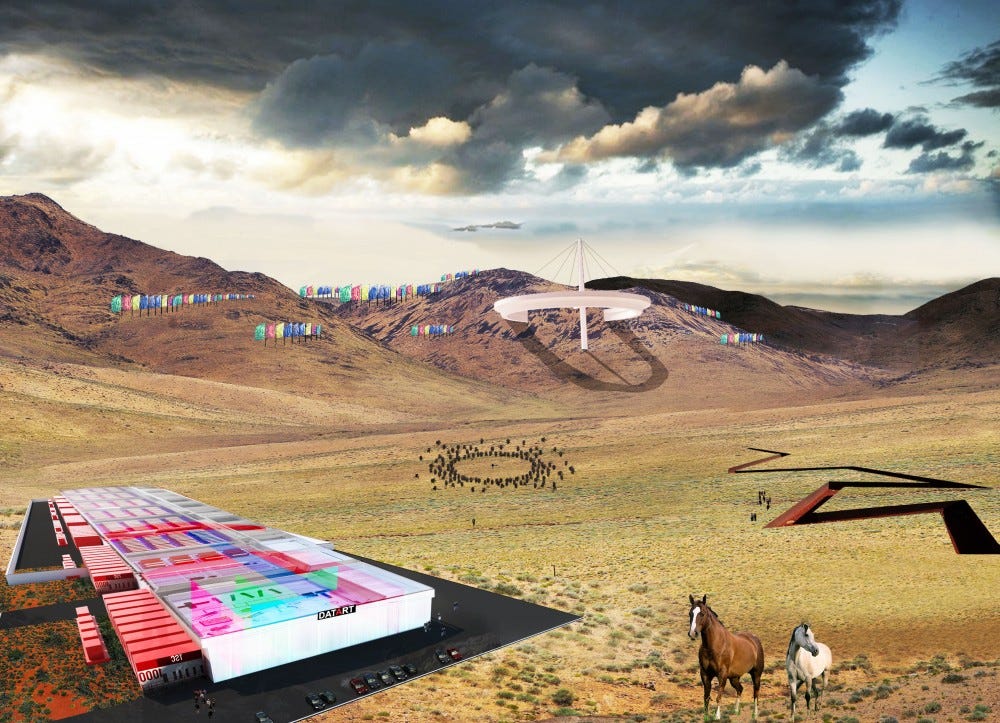
The most architecturally significant structures of the era — data centers, fulfillment warehouses, automated greenhouses, the "agglomeration of boxes" he studied at Nevada's Tahoe Reno Industrial Center (Walmart next to Amazon next to Tesla next to Google) — are designed by anonymous industrial firms outside academic discourse, at scales where human proportion is irrelevant.
This observation also flies in the face of a very common tech twitter idea of: we just have to make the data centers look beautiful. I don’t see that as a solution, nor does it seem to have the political will from the firms that construct these megaliths.
And also, for whom? For what end? Again, these data centers dwarf human scale. They are not a site for public consumption. You cannot rest in the shade it may provide. This notion of “the architecturally beautiful data center” is yet another top down fantasy applied from far away to subdue a culture the technologist doesn’t actually wish to engage with.
Understanding The Narrative (this part is easy)
It’s not a surprise to anyone that setting any type of new narrative for data centers is an uphill battle.
To condense the entirety of the previous Rem section → We have to stop viewing data centers as a static endpoint for AI development, offloading the urban intellectual project into physical weight in the countryside, that points back to elites in San Francisco.
Data centers, in the American psyche, are completely wedded to AI. Data centers have no relation to the mechanism in which the average person writes their email or uploads a photo to Instagram. That infrastructure has been relegated to a new kind of other-ism. Data Centers (particularly new data centers) = AI
And if Data Centers = AI → then that narrative load they carry is virtually the same. “Joblessness, perpetuated by an elite class that claims it’s necessary for progress.”
It’s important to pause here because “progress” is an incredibly loaded phrase that broader Silicon Valley holds as its raison d'être. I can’t get into that very tangled knot here, but if you’re still reading, reflect on all the ways the valley’s notions of progress do not reflect the needs of the average American.
To me, this is a classic case of when a capital and talent based narrative, escapes containment and becomes THE narrative.
Said another way, when technologies are as important as we within the community believe them to be → the narrative will reach everyone. And unfortunately, the narrative du jour, was crafted for capital momentum and talent wars. Not to win the hearts of those that needed to be the joyful hosts of megalopolis level infrastructure in their backyard.
A New Narrative
The rules of the new narrative need to be as such:
The infrastructure cannot be anonymous — it has to belong to someone
I genuinely believe anonymous infrastructure works against it’s intended purpose. If I burn down a data center, I’m hurting the idea of AI, not [insert company]. Abstracting the data center to idea space vs a company name you are aware of that has real humans, is a mistake.
Amazon Fulfillment Centers, flawed as they may be, represent a cleaner relationship to employment and service than data centers do today. And the fulfillment center is a hub that necessitates people, far more than the data center does. It’s far more radical for the data center to “reveal itself” as a broader gesture of interdependence, despite is sparser human footprint.
Reciprocity and viewing the countryside as a host, not just a site.
ie: this data center comes with an agreement with its host to benefit the immediate community. Whether that’s credits to the schools and hospitals, or equity to the town.
Purpose
The host must receive new communal purpose (and pride?) as a result of accepting this infrastructure. This ties directly into the reciprocity.
“Your children will own a piece of it.” creates a new communal upside and future looking purpose.
Electricity Prices
I don’t know how data center narratives move forward without a serious conversation around energy. There needs to be significant partnerships built that pair the data center motion with energy providers and increasing capacity that truly answer community concerns.
Architectural Form
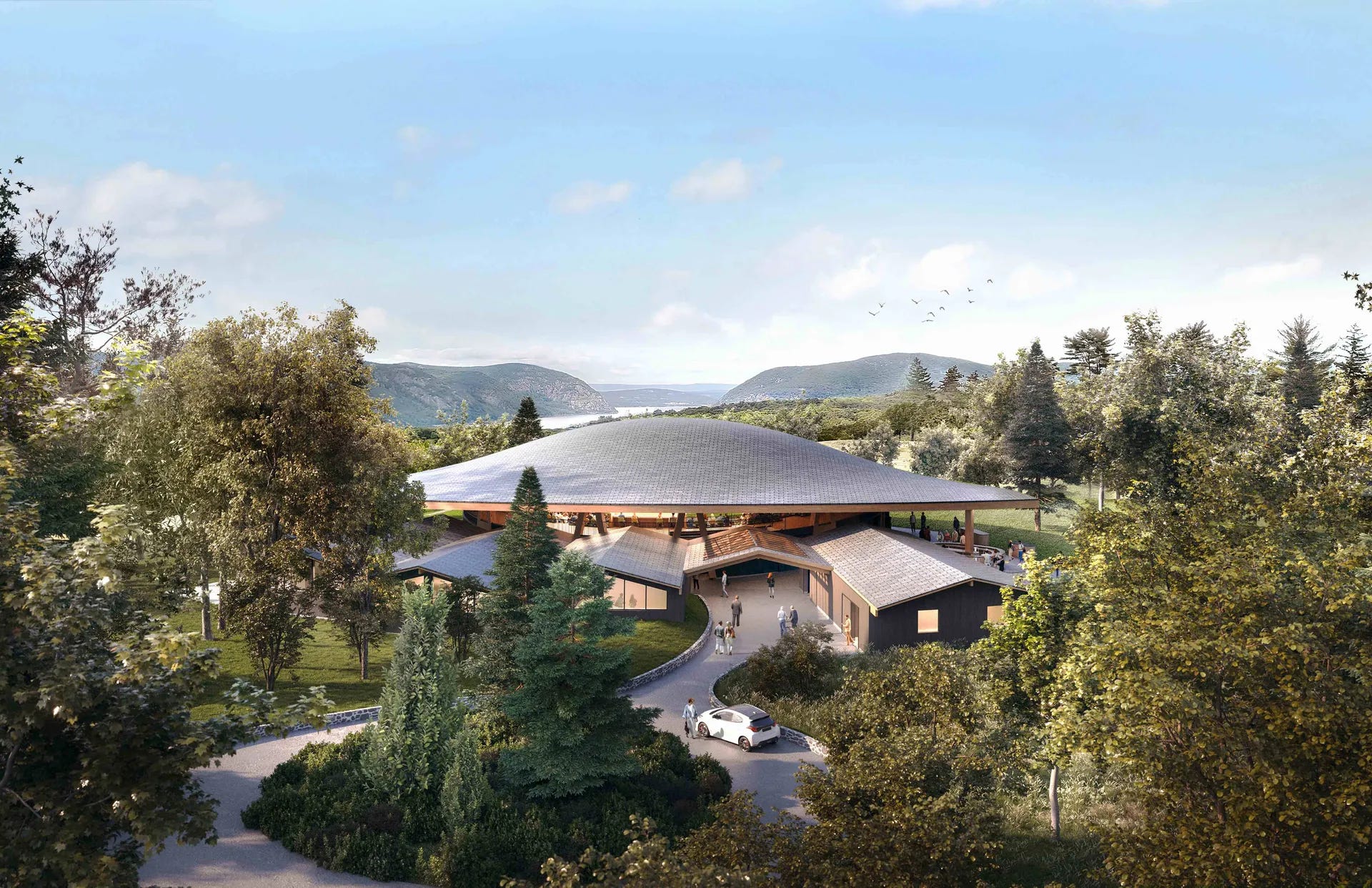
While I don’t believe that “just make them beautiful” is enough of an answer, we also can’t ignore that these things currently are gross brown boxes. The first team to really address the data center as an object of presence, creates an interesting moment we can all learn from.
It’s important to define that presence is not “beauty”. Lest I refute my earlier point about the design of data centers themselves. Presence is authorship, which is the first rule of this list, translated into the architectural form. Where as the current brown box is the anonymous opposite.
A Theory of Refusal
People will say no. The reaction can’t be a knee jerk statement from technologists that “these townies are stupid”. To maintain individual and communal dignity is to respect refusal.
None of this is policy. And I don’t delude myself in thinking that it solves the entirety of the situation we, as an industry that believes in this technology, find ourselves in.
But I do hold onto this one belief strongly: a narrative that can't survive a “no” isn't a narrative. Some of these projects shouldn't be built. Not because AI is bad, and not because everyone opposing them is right. But because a country where every proposal eventually goes through regardless of what the host says is running on force. This would really shift how we believe progress (that tricky word keeps coming up) is meant to occur over the next decades if we can only rely on force… Eradicating the mechanism of communal consent will further the belief that only radicalism can respond to such force. This is a downward spiral.
Rem understood that the countryside was never the backdrop. And I believe we have re-entered a critical moment where the countryside is determining the momentum of Silicon Valley in unexpected ways.
We are building the largest structures of the century, thousands of miles away from company headquarters, while refusing to put our names on them. Like my mentor Freddy Anzures says, “we are chefs afraid to taste our own food.” I’d add that we won’t even sign the menu.
The window to set a new narrative for the most critical technological moment of our lifetimes is now. We cannot let it close simply because we believe we know better.
I don’t do edits really, so excuse typos and things that don’t make sense.
Thanks so much for giving me your attention. I hope it was worth it, if not… unsubscribing will not hurt my feelings, and will give you back time you literally cannot have back.
Much love.
Live in the light
Disclaimer
Views expressed in “posts” (including podcasts, videos, newsletters, substacks and social media) are those of the individual GC personnel who wrote the post or is quoted therein and are not the views of General Catalyst Group Management, LLC, “GC”) or its respective affiliates. GC is an investment adviser registered with the Securities and Exchange Commission. Registration as an investment adviser does not imply any special skill or training. The posts are not directed to any investors or potential investors, and do not constitute an offer to sell — or a solicitation of an offer to buy — any securities, cryptocurrencies, or any financial instrument or property, and may not be used or relied upon in evaluating the merits of any investment. Additional important information about GC, including Form ADV Part 2A Brochure, is available at the SEC’s website:
http://www.adviserinfo.sec.gov